Well Water Safety: DO's and DON'Ts
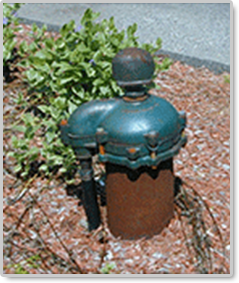
DO's AND DON'Ts IN YOUR YARD
Let's start first with the area of the yard where your well sits, and the part of your well that is above ground.
When landscaping around your wellhead, be sure to keep the top of your well at least 12” above the ground around the casing, so that surface water can never enter your well. And you will want to ensure the area around your wellhead slopes away from the well to prevent surface water from pooling around the casing, which can cause contamination and damage to your system. Keep the area around your well accessible and clean of leaves, grass, other debris, and piled snow. And take care when working or mowing around your well, as a damaged casing can jeopardize the sanitary protection of your well. And anytime there’s been flooding near your well, do not use water from your well until it has been tested for bacteria contamination (helpful accessory: water quality testers).
Your well should be at least 100 feet away from potential contaminants sources such as oil tanks, septic tanks, or chemical storage tanks. Avoid using, mixing or storing hazardous chemicals, such as paint, fertilizer, pesticides, motor oil, gas, weed killer or other pollutants near your well. Do not dump waste near your well or near sinkholes, as this may contaminate your water supply. And if you have a septic tank, be sure to have it pumped regularly to prevent possible contamination of your groundwater from it overflowing.
You should routinely conduct a thorough check of your wellhead. Make sure that the well cap is not broken and is free from any holes or corrosion, and it is at least 12" above the ground with a watertight seal (see costs and reviews of well caps). If it doesn’t already have one, you should install a sealed sanitary cap to prevent contamination from insects, small animals, and other surface contamination. And if you have an abandoned well on or near your property, it should be sealed. Abandoned wells can be sources of potentially polluted groundwater, which could make water from your working well unsafe to drink.
OTHER DO's & DON'Ts
If you have infants in your home, you should have your well especially tested for nitrates. Most wells will test for high concentrations of minerals such as calcium, magnesium, and iron. So to improve doing laundry, bathing and the taste of your water, you should consider adding the appropriate water softener system. And if your well water has too much iron in it, then you should NOT use bleach when laundering, because it will cause a chemical reaction that will stain your clothes. Instead of laundering with bleach, you can use hydrogen peroxide, borax, Iron Out, or pre-soaking and rinsing your laundry in store-bought water and bleach.
You should regularly disinfect your well once an inspection has determined that your water system is free from any sources of apparent contamination. Disinfection not only cleans your well, but also helps maintain its production capability. But be careful not to over-chlorinate your well. And whenever you are uncertain about the safety of your water supply you should have your well tested for bacteria.
Be sure to install backflow prevention devices on all outside faucets with hose connections, as this will help keep pollutants from being siphoned back into the hose and into your water supply. And when using a hose to add water to pesticides, fertilizers or other chemicals, you should never put the hose inside the tank or container, as this can potentially result in these very dangerous chemicals being siphoned back into your water supply.
Always use a licensed water well driller and pump installer for any service done on your well or pump. You will want to keep careful records of your well installation, any maintenance or inspections, repairs, and all water test results and disinfections. And keep your well records in a safe place.
TESTING
At least once a year, you should have your well tested for total coliform bacteria, which will give an indication of whether there is a likelihood of more dangerous bacteria present. And every three years have your well tested for pH, TDS, nitrate, and other contaminants of local concern. In addition to ensuring the safety of your drinking water, you can also use the results of your well tests to make the appropriate water filtration decisions for your home.
While waiting for your well test results, to ensure safe drinking water for your family, you should only drink bottled water or water from a known, safe, source. Or if necessary, you can make water safe to drink by boiling the water for five minutes. All water tests should be conducted by a certified lab. After you receive your results, compare them to the drinking water standards for public systems by the EPA.
And you might want to consider having a downhole inspection done of your well, by a contractor who uses an underwater camera. This can help ensure that you well still has tight construction and that the downhole equipment is working properly.
WHAT TO WATCH FOR
If you ever notice any changes in your water (odors, color, laundry problems etc.), you should have your well immediately tested. And if your sinks and toilets are a reddish color, or if you notice your clothes look dingy or slightly orange over time, or develop an odor even after laundering, then your well water may have too much iron in it. And most important of all, if your water is ever cloudy, smelly or discolored, DO NOT drink the water.
Related Articles . . .

Options for Filtering Your Tap Water
Across the country, water quality concerns are on the rise. This article explains why you should filter your home's water, and the pro's and con's of 6 home filtering options.

Lawn Watering Tips: Better Results and Less Water
With community watering bans becoming more and more frequent, now is a great time to learn how to get the most benefit for your lawn while using the least amount of water.

Avoiding Common Plumbing Problems
Plumbing problems can range from minor visible nuisances, to hidden troubles that can be causing major damage to your home and your family’s health. This article discusses how to avoid common plumbing problems.

What NOT to Do If You Have a Septic System
Replacing a septic system can cost tens of thousands of dollars, and having to frequently pump your tank gets expensive too. To avoid these costs, here is what you should NOT do if you have a septic system.
