Your Company Name, Contact Info and Logo could go here !

Foundation

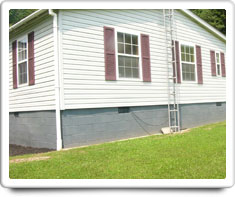
To maintain the integrity and useful life of your home's foundation and to avoid costly foundation repairs, it is important that your home maintenance program include the proper maintenance for your home's foundation.


The concrete foundation is what supports the weight of your home or building and should be kept dry and insect free.  See also:  Basements and Pest Control.


Shown in the "Maintenance" tab above are the recommended routine maintenance tasks for your home's foundation. The "Questions / Answers" tab above shows our answers to related questions. And the "Articles" tab above provides links to related informational articles and sources.


Get tips for saving money on energy, improving safety and more with our free Newsletter, or sign-up for our free Personalized Reminders.


 Maintenance Task:  Inspect foundation


    How do you inspect a house foundation?  


The foundation of your house or building should be checked for the following:

  1. Check foundation walls, floors, concrete, and masonry for any cracking, heaving, or deterioration.  Repair as necessary.

  2. Make sure that soil against your foundation is properly graded away from your house.  Soil should slope 4-6 inches away from the foundation for a distance of about 3 feet away from foundation walls.  Fill in areas where water may puddle against the foundation.

  3. Make sure that the splash pans for the roof gutter downspouts direct water at least 3 feet away from the foundation, and that the water does not drain back against the foundation.

  4. Inspect foundation walls for signs of termites (such as evidence of tunnels or dirt bridges).  Check flashing and termite shield.  If you suspect termites, contact a professional exterminator.

  5. Inspect where pipes go through the foundation (including in the garage) and caulk and seal as necessary.

  6. If you have wood siding, be sure that no dirt, mulch, shrubs, etc. are touching your wood, as this can become an easy pathway for pests and moisture to enter your home.


    Why is it important to inspect a house foundation?  


Damage to your foundation can cause the house or building to shift and crack.  Termite damage can be devastating (see Pest Control).


    How often should you inspect a house foundation?  
    Inspect annually (May).  


    How does Home-Wizard rate the costs and benefits for this task?  
    The cost of this task is very low from an investment of time standpoint.  It is estimated that this task should only take about 30 minutes to complete, depending on the size of your house and the amount of shrubbery around your foundation.  The task is relatively easy to do, and no specialized tools are required.  
         
    The benefits of this task are relatively high.  Doing this task can help prevent serious damage to your foundation and by pests, including termites, which can be very costly to eliminate and repair damage from.  
       
    Overall Home-Wizard benefit-versus-cost rating (one 'hat' = low and four 'hats' = high)  


QUESTIONS & ANSWERS from "Ask-a-Wizard":

QUESTION from "Heartmom"

What is the best way to get rid of cracks in the walls or ceiling of a house? If you can't get rid of them, what is the temporary "Fix," and how often must this "Fix" be done?

ANSWER:

Heartmom:

Let me respond to the second part of your question first. Your question about what to do if you can't get rid of cracks in your wall or ceilings, and how often a “temporary fix” might have to be repeated, is very important. The reason it is important is that it gets at the need to determine WHY the cracks are forming in the first place. Usually, cracks result from a house naturally settling on its foundation, or periods when you house may have experienced large changes in temperature or humidity, etc. Small cracks created by these events can be successfully repaired and should last for a long time. But if your repaired cracks end up showing up again in just a few months, getting bigger, or are joined by cracks in other parts of the wall or ceiling, then this may be an indication of a bigger problem, such as: the wood framing in the walls or ceiling may be flexing due to excessive moisture; or the structural integrity of your house might be compromised; or that your home needs a humidifier for the winter; etc. If this is the case, then it would be best to talk to a building contractor who can diagnose the problem before more serious damage is done to your home.

Now regarding the first part of your question, the initial step to fixing a crack in the wall or ceiling is assessing whether you have plaster or drywall (drywall is also known as sheetrock, plasterboard, or wallboard). 

With plaster, you will need to check to see if the metal lathe on which the plaster is applied needs to be secured with some additional nails. The cracks can then be filled with plaster compound. After it dries, you can sand it and paint the affected area, and carefully “feather” it out to the surrounding areas.

For repairing drywall wall or ceilings, the patch compound you will use is called “joint compound” (also sometimes call “spackling putty”). Applying drywall joint compound typically involves putting several coats on, and sanding in between each coat. Use a sanding block to help keep your work flat and smooth.

Sometimes larger cracks both in plaster and drywall need to have the crack area enlarged to remove loose pieces. This can be carefully done with a utility knife. A very wide crack will need more reinforcement to help it stick properly. And this is where patching tape (also called joint tape) will be helpful. If the section is very large, then you may even want to cut back the wall or ceiling all the way back to the middle of the studs or ceiling joists (the middle of the studs so that you still have something to nail to), and then adding a new section of drywall (and then patching the seams with drywall tape.)

One important note is that textured ceilings installed before around 1979 may contain asbestos, which is hazardous to breathe when disturbed. If your house is more than 25 years old, you should have the ceiling tested. And if the test comes back positive, then you will need to have a licensed asbestos abatement contractor tell you what your options are. Do NOT work on it yourself if you suspect that there could be asbestos involved.

We hope this helps.
Regards,
Home-Wizard.com
____________________


Sponsor Message

Home-Wizard is brought to you by our network of sponsors  as part of a commitment to making it easier for you to manage your home. 

Each feature of Home-Wizard is designed to motivate, inform, encourage and support you to do the tasks that are important for saving energy and reducing your carbon footprint, improving the safety of your home, and maintaining the value of your home and major appliances.

iPhone
Android
  • Tip of the Day

May Tips

Each month, Home Wizard can send you free personalized tips & reminders that will help you save energy, improve safety, and more.

Latest Video

"Bathroom Makeover Ideas"

5 types of makeover ideas for your bathroom.

Latest Articles

Top Five Tasks for May
If you only do five routine maintenance tasks this May, here are the ones that we that suggest that you do . . .

Late Spring Lawn Care Guide
In June your grass enters its "growth phase,? when it needs nutrients to support its healthy growth . . .

Guide to Automatic Sprinklers
If you have an automatic sprinkler system, or if you are considering adding an automatic sprinkler system to your home . . .

Especially for Pets: A Spring Cleaning Checklist
If you have a dog or cat, here is a quick checklist of things that you will want to consider as part of your spring cleaning . . .

Making Window Cleaning Fun for Kids
Here are some ideas for how to make the job more fun for getting your kids involved with cleaning your windows . . .

Tip of the Day
 
 
Goals

What are your goals for your home?

Save energy?

Maintain safety?

Be more green?

Home Wizard can help!

Want Monthly Personalized Tips but Hate Email?

Hate email? ... click here to recieve your tips through

Smart Phones
iPhone
Android
May Tips

Each month, Home Wizard can send you free personalized tips reminders that will help you save energy, improve safety, and more.

Are you a home service provider?

Home Wizard is more than just a newsletter for your customers. It's a way to show you really care about helping them take care of their home!

Unsubscribe | Privacy | Terms of use | | Are you a home service provider?