Properly Placing Your Carbon Monoxide Detectors
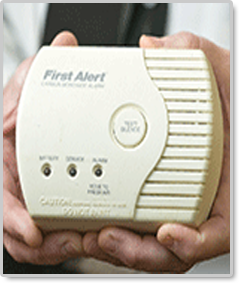
If you have any fuel burning heater or appliance, fireplace, or attached garage, you must have a carbon monoxide (“CO”) detector/alarm in your home. The installation locations will vary by manufacturer for their specific type and style of detector, and you should read and follow your manufacturer’s instructions for your specific unit. But here are some general guidelines for where to place your CO monitors, so that they are the most effective in keeping your family safe . . . and where you should NOT place your CO detectors.
WHERE TO PLACE THEM
The International Association of Fire Chiefs recommend a carbon monoxide detector be installed on every floor of your home, including the basement. A detector should be located within 10 feet outside of each bedroom door, and there should be one near or over any attached garage. It is important that your CO detectors be close enough to the bedrooms so that the sound from the alarm is loud enough to wake up the person in the room.
Because carbon monoxide is slightly lighter than air (and because air with CO is typically warmer, and therefore rises) your detectors should be placed on a wall about 5 feet above the floor. Some CO detectors can be plugged directly into wall electric outlets, so you may be tempted to plug them into wall outlets which are only a foot or two off of the floor. But for the best effectiveness, they should instead be located about 5 feet off of the floor.
If your manufacturer recommends it for your particular model, your CO detector may be placed on a ceiling.
WHERE NOT TO PLACE THEM
The following are places where it is NOT recommended to place your CO detectors:
-
A CO detector should not be placed within 15 feet of heating or cooking appliances.
-
CO detectors should not be placed in or near humid areas, such as bathrooms.
-
Do not install CO detectors within 15-20 feet of any furnace or fuel-burning appliances, as these appliances may emit a small amount of carbon monoxide upon start-up, and give false alarms.
-
Do not place your CO detectors in areas where they will be damaged by children or pets.
-
Do not install CO detectors in direct sunlight or areas subjected to temperature extremes, such as crawlspaces, unfinished attics, and porches.
-
They should not be installed behind curtains or other obstructions.
-
And your CO detectors may not function properly if installed near ceiling fans, heat vents, air conditioners, fresh air returns, or open windows.
OTHER CONSIDERATIONS
The life expectancy for your CO detectors will be specific to each manufacturer’s recommendations. Most detectors should be replaced every 5-6 years. And if you wait longer than 5-6 years, then you can be living with a false sense of security.
Also, some CO detectors can be wired into your existing home security or fire panel which is monitored by a central station. With your CO detectors wired in to a central monitoring station, the central station can be alerted to the high concentrations of CO gas and can send the proper authorities to investigate possible carbon monoxide poisoning. This can be extremely valuable in case your family has become overcome from the effects of CO, or are sleeping soundly, or if no one is at home.
Related Articles . . .

Why and How to Clean Your Smoke Detectors
To keep your smoke detectors operating properly, you should clean them at least every six months. This article explains why, and the easy steps you can take to clean your smoke detectors.

Choosing the Right Fire Extinguisher
You should definitely have a fire extinguisher in your kitchen, garage, and workshop. This article explains: the different types of fire extinguishers; how to select the right one; and how to properly use them.

Home Fireproofing: Prevention; Detection; Action
Keeping your home and family safe from fires involves focusing on three areas: prevention, detection and taking emergency actions in the case of an actual fire. 400,000 homes catch on fire each year.

7 Things That Can EXPLODE in Your Home!
If your attitude towards home maintenance is I don't want to know about it, unless it will keep my house from blowing up! . . . then you will love this article and video.

Keeping Your Family Safe This Holiday Season
Hopefully your holidays this year will be wonderful. But the holidays are unfortunately a time of increased accidents and crime. So here are some holiday safety tips to help you protect your home, children, and pets.
