Choosing the Right Fire Extinguisher
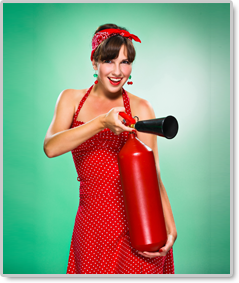
Below we will discuss: the different types of fire extinguishers, choosing the right one for your home, and how to use a fire extinguisher.
The Different Types of Fire Extinguishers
Fire extinguishers are divided into five categories, based on different types of fires that they are designed to fight. Each fire extinguisher also has a numerical rating that serves as a guide for the amount of fire the extinguisher can handle (see costs and reviews of ABC fire extinguishers). The higher the number, the more fire-fighting power. The following is a quick guide to the different types of fire extinguishers:
Class A
extinguishers are for ordinary combustible materials such as paper, wood, cardboard, and most plastics. The numerical rating on these types of extinguishers indicates the amount of water it holds and the amount of fire it can extinguish.Class B
fires involve flammable or combustible liquids such as gasoline, kerosene, grease, and oil. The numerical rating for class B extinguishers indicates the approximate number of square feet of fire it can extinguish.Class C
fires involve electrical equipment, such as appliances, wiring, circuit breakers, and outlets. Never use water to extinguish class C fires because of the risk of electrical shock (water is a conductor of electricity). Class C extinguishers do not have a numerical rating. The C classification means the extinguishing agent is non-conductive.Class D
fire extinguishers are commonly found in a chemical laboratory. They are for fires that involve combustible metals, such as magnesium, titanium, potassium, and sodium. These types of extinguishers also have no numerical rating, nor are they given a multi-purpose rating, as they are designed for class D fires only.Class F
: fire extinguishers are designed for fires involving cooking oils and fats, like those found in a deep fryer.And then there are also fire extinguishers which are designed for multiple types of situations, and these types are "AB", "BC" and "ABC."
The Right Extinguisher for Your Home
With so many fire extinguishers to choose from, selecting the proper one for your home can be a daunting task. In fact for some people, not knowing which kind to get is their biggest hurdle in getting one. So what is the best type for a typical home? The best choice for a typical home is an "ABC" type fire extinguisher that is designed for multiple types of fires.
And just as important as having a fire extinguisher is having it easily accessible in case of an emergency.
It is recommended to have at least one fire extinguisher on each floor of your home, and the most important places to have a fire extinguisher are in areas that are more susceptible to fire: your kitchen and your garage.
Kitchen:
According to U.S. Fire Administration statistics, the kitchen is the place where fires most often start. Do not put the fire extinguisher near the stove as it will be out of your reach if the fire is on the stovetop. The best place to put the fire extinguisher is mounted by the door of your kitchen, so that you have will have easy access to it.Garage:
Because a garage is typically a place where flammable materials are stored, this is another place where you will want to have quick access to a fire extinguisher. And like the kitchen, the best place to store the extinguisher is mounted by a doorway.Your fire extinguishers should be kept in plain sight where they can be easily reached in an emergency. Do not put them in closets, as this will cost you valuable time when you need it.
How to Use a Fire Extinguisher
Hopefully, you will never need to use your fire extinguishers. But if you do, just remember "P.A.S.S.":
P:
Pull the pin that is located in the handle. This pin keeps the handle from being accidentally squeezed and discharging the extinguisher.A:
Aim for the base of the fire, where the extinguisher can have the most effect on the fire.S:
Squeeze the lever at the top of the extinguisher, which will start to deliver the contents of the extinguisher.S:
And finally, be sure to sweep the direction of your spray from side-to-side across the base of the fire.Related Articles . . .

Home Fireproofing: Prevention; Detection; Action
Keeping your home and family safe from fires involves focusing on three areas: prevention, detection and taking emergency actions in the case of an actual fire. 400,000 homes catch on fire each year.

Why and How to Clean Your Smoke Detectors
To keep your smoke detectors operating properly, you should clean them at least every six months. This article explains why, and the easy steps you can take to clean your smoke detectors.

7 Things That Can EXPLODE in Your Home!
If your attitude towards home maintenance is I don't want to know about it, unless it will keep my house from blowing up! . . . then you will love this article and video.

Keeping Your Family Safe This Holiday Season
Hopefully your holidays this year will be wonderful. But the holidays are unfortunately a time of increased accidents and crime. So here are some holiday safety tips to help you protect your home, children, and pets.

Maintaining Your Emergency Supplies
When your power goes out, you'll be glad that you have your emergency supplies available at your fingertips. But to ensure they're ready to go, your emergency supplies need routine maintenance.

Tips for Electric Outlets & Surge Protectors
According to the National Fire Protection Association, there is an average of 81,000 electrical system fires in homes every year. Here are 20 tips about electrical outlets and surge protectors to protect your family and appliances.
