Your Company Name, Contact Info and Logo could go here !

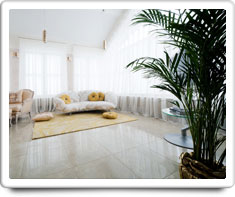
Marble Floors

To maintain the appearance and useful life of your marble flooring, it is important that your home maintenance program include the proper maintenance for your marble floors.


Marble is a very hard, but porous surface.  Spills should be cleaned up immediately to keep stains from seeping into the surface pores of the marble flooring.  See also:  Wood Floors and Carpet & Rugs.


Shown in the "Maintenance" tab above are the recommended routine maintenance tasks for your marble floors. The "Questions / Answers" tab above shows our answers to related questions. And the "Articles" tab above provides links to related informational articles and sources.


Get tips for saving money on energy, improving safety and more with our free Newsletter, or sign-up for our free Personalized Reminders.


 Maintenance Task:  Annual floor treatment


    How do you do a treatment of a marble floor?  


A treatment of marble flooring include 4 steps:

  1. Cleaning: Wet the surface thoroughly, then scrub with a mild, nonabrasive detergent using a clean fiber brush.  Rinse by flooding with plenty of clean, hot water, then repeat washing if necessary.  The final rinse should remove all traces of detergent.  To prevent streaking, wipe dry with a clean, lint free cloth.

  2. Remove stains: Stains that do not come out with simple washing should be treated according to the type of stain: organic stains, rust stains, or oil stains.  Consult your local flooring professional for the type of cleaner and stain removal procedure for your particular floor and stain situation.

  3. Polish rough spots:  If an area feels rough because of small scratches or other imperfections, it should be sanded smooth with extra-fine #400A wet-or-dry sandpaper.  After the surface feels smooth, wipe clean then apply water and tin oxide powder by rubbing briskly over the spot until it shines.  Wipe off immediately afterwards with a clean damp cloth.  Repeat if necessary.

  4. Wax: Apply a top quality paste wax.  Buff to a high shine using a lamb's wool applicator or soft cloth.


    Why is it important to do a treatment of a marble floor?  


Renews the appearance of your marble floors.


    How often should you do a treatment of a marble floor?  
    Perform annually (March).  


    How does Home-Wizard rate the costs and benefits for this task?  
    The cost of this task is moderately high, in that it is a fairly time consuming process to do correctly.  You may want to consider hiring a professional for this task.  
         
    The benefits of this task are the renewed appearance of your expensive marble flooring.  
       
    Overall Home-Wizard benefit-versus-cost rating (one 'hat' = low and four 'hats' = high)  


QUESTIONS & ANSWERS from "Ask-a-Wizard":

QUESTION from Corrine B Hinkle - randchinkle on 2/12/2008:


We have had tile floors installed. The grout has been sealed twice at installation. Still, the (lght-colored) grout gets dirty and I cannot get it clean. Any suggestions?
Thanks in advance for your consideration

ANSWER FROM HOME-WIZARD.COM ON 2/12/2008:

Dear randchinkle:

Here is a webpage that gives a good description of how to clean tile grout:

http://www.mrscleannw.com/tips/grout-cleaning.html 

Which describes the best way to clean grout (i.e., using a mixture they describe of baking soda, vinegar, ammonia and water, and then using a wet/dry vacuum to pull the dirt out of the porous grout after applying a cleaning solution).

If this still doesn’t work for you, then it may be possible that your grout has become stained (especially since you say it is light colored). If it has indeed gotten stained, then you have a couple of options: 1) you can use a tool called a "grout saw" to gently remove the top layer of grout, then re-grout your tile with clean grout; or 2) tile stores sell special grout stains that permanently color the grout and hide the stains. 

Hope this is helpful
Home-Wizard.com
____________________


QUESTION from Lima on 4/27/2008
My baseboards are mold, bent and squeak by much too low air from outside. Besides the air flow issue, how can I fix those flooring problem?


ANSWER from Home-Wizard.com on 4/27/2008
Dear Lima:

Just so that I understand your question, when you refer to your "baseboards", do you mean the wooden baseboards where your walls meet the floor? Or are you referring to your baseboard heating system? Or are you referring to your hardwood floor boards?

And what do you mean by "much too low air from outside"? Are you referring to an area that is getting wet, and not having enough air circulation to dry it out?

If you can provide me with some additional information, I can then give you the best answer.

Sincerely,
Home-Wizard.com
____________________

FOLLOW-UP COMMENTS from Lima on 4/28/2008

Thank you for your reply.
The baseboard I meant is the board under the carpet sponge, in this case which is like a big pannel.
What happen was, We installed a new furnace and heat pump, along with it the installer recomended humidifierto come with it.  It was way too powerful and created extra noise and air leak from the air hundler(the leak also created a very loud hissing sound), even though no harm to the house for 5 or 6 months.
 
When the installer tried to fix the air leak and noise by reducing the air flow to the lowest stage, I started to notice a mugging smell, and I turned off the humilifier. Which is also when the baseboard started to squeak.
But the smell was still there a month later.  As the day passed by the baseboard started to bent here and there so I could feel the bump on the floor through my feet.
 
And one day, I happened to find out that the system automatically set to bring in the out side air every 20 minute for 20 minutes.  In a normal weather or air flow those damage won't happen.  But in this Northwest it rains 24/7 and the humidity is most likely more than 90 percent.  Atop of that the Forced Air flow was so low and won't be able to agitate the air.  It was prooved by the temperature different between the floor and where the thermostat is.  There are 6-8 degrees difference, also room to room temperature are so different that my hands and feet would went cold even though I set the temperature to 75 degrees.

To prevent further damage I shut the whole system down and turned on when the temperature dropped.  By the way the whole damage was caused by American Standard so called Comfort something (16 ser)heat pump along with the Comfort R variable speed furnace.  Also the Air cleaner Acu clean couldn't get rid of the oder because when I set the air flow to circulation the air is so weak.
 
I have never dreamt of a air conditioning system could cause so much damage. 
 
So, should I tear off the entire carpet and change the baseboard or I can just use a nail  gun to nail it over the carpet?  But the floor were so uneven now, I actually felt like I stepped on something and in some area the dark spots are visible ( I assume those are mold, unfortunately the carpet is white)
 
Thank you again.
Sincerely,
Lima

ANSWER from Home-Wizard.com on 4/28/2008
Lima:

Thank you for your clarification. I now have a much better idea of what you problem is, and can do a better job of helping you find solutions.

From you description, it sounds like you actually have two problems here:

1) how to help you fix your floor underlayment which has been damaged by moisture, and 

2) how to solve the problem that is causing the excess moisture in your home, which has led to the damage to your floor.

Let's start with your first problem: what to do with your floor underlayment that has been damaged? Floor underlayment is the layer of plywood that is fastened down on top of your floor joists. And then on top of this layer of plywood goes the surface flooring, such as tile, hardwood, or in your case, carpet. Underlayment is typically made of plywood, and it is glued, nailed and screwed down to floor joists to hold it securely in place, so that it doesn't creak. And if you have tile or hardwood flooring, it helps keeps the tile and hardwood flooring level and from shifting around.

Unfortunately, it sounds like your plywood underlayment has been exposed to excessive moisture, and as a result, it has gotten both swollen and has been attacked by mold. At this point, just drying the area out is probably not going to be enough. The plywood has gotten warped, and is not likely to go back into its correct flat shape. So where it has pulled up the nails, it will likely stay up, and therefore you will continue to get the squeaking noise when you walk over it (its the sound of the nails going in and out of the wood in the floor joists as the underlayment flexes up and down). 

But more importantly, since you have already seen significant evidence of mold formation, this plywood has become contaminated with mold, and even if you dry it out, the mold spores can remain in the wood, and can therefore return when the room gets humid. This can lead to health problems in your home.

So for both of these reasons, I would suggest that you carefully pull back the carpeting, remove the affected plywood underlayment, and replace it with new plywood. And you should be sure to remove all of the old glue, nails, etc. from the floor joists before you glue, nail and screw the new plywood down. So that the new plywood fits down tight on top of your floor joists.

Now for your other problem, regarding what is causing the excessive moisture that ruined your underlayment? If I understand you correctly, that you were told that you needed to add a "humidifier" to your air conditioner system (not a "de-humidifier"), even though you are living in the Pacific Northwest where it typically rains half of the year, and as such the humidity is already relatively high? And further, you have a fresh air exchanger that is bringing outside air into your home every other 20 minutes? 

A couple of thoughts here. First, it sounds like you need to find a different HVAC contractor. I could understand possibly adding a humidifier to run in the winter when the air might be dry. But in the Pacific Northwest, I would not add a humidifier unless you have measured the humidity in your home during the winter and determined that it is indeed too low (you can purchase a low-cost hygrometer to measure indoor humidity). But the dry season in the PNW is so short, I would question whether a humidifier would be a good investment.

On the other hand, it sounds like the more important issue that you have in your home is DE-humidification. That is, how do you get the moisture out of the air in your home. 

When an air conditioner runs, it cools the air which also lowers what's called the "dew point", that is, the temperature at which water condenses out of the air. This is why when you look at your air handler, you should see some tubing or piping that allows this water that has condensed to drain out of your house (in our Newsletter last month we had an article about how it is important to inspect this hose at least once a year to insure that it is draining properly).

So it sounds like your air conditioner is working hard to lower the temperature and remove moisture from your home, but then your installed added a humidifier that put moisture right back in.

The other problem is that, since you are in the Pacific Northwest, that your fresh air exchanger is bringing up to 90% humidity air into your home during rainy days (and of course in the PNW, you have quite a few rainy days . . . on average 155 days per year). So this is bringing a whole lot of moisture into your home as well.

This is why I suggested that you find a new HVAC contractor. It sounds like you need someone who can look at the capacity of your current heat pump and furnace, and determine:

a) do you really need a humidifier? Can it be set so that it does NOT run when the humidity outside is above a certain level?

b) how should your fresh air exchanger be set to operate? Can it be set so that it does NOT run when the humidity outside is above a certain level?

c) does your system have adequate de-humidification capacity? 


I hope this is helpful Lima. If you need additional help, just let me know.

Sincerely,
Home-Wizard.com
____________________


QUESTION from Lima Chan on 7/3/2008
Some of my house's foundation beams were twisted and it pushed up the underlayment board. So I have some body put side board between the beam and post all over my house but I was told that it cannot correct the problem I have. It has to be two sister board bolted against the post. Is it right? Also, I also have him put extra posts, looks like it was not the right post. Is it right that the foundation post has to be the one with a twisted screw not cemented to the ground(I was told this kind is to be used to build the deck but not foundation) Any information will appreciated. Just to think what have done has to be redone makes me frustrated. Thank you. lima
____________________
ANSWER FROM HOME-WIZARD.COM on 7/4/2008
Dear Lima:

Without seeing your specific situation, it difficult to say what should have been done to properly level your floor.

I would have thought that to provide adequate support that the new posts would need to be installed on top of concrete footers that would have needed to be cut, dug and poured into the ground below them. But again, it is hard to say without actually seeing your exact situation. Similarly with the sistering of the beams.

However, here is a link to a webpage about floor leveling that you might find useful: http://www.houserepairtalk.com/showthread.php?t=3099

Hope this is helpful.
Home-Wizard.com
____________________

QUESTION from David Holeman, Sr. on 11/10/2008
I bought a 15 year old home with marble flooring in the master bath. Bordering the shower, which once had leaks,the marble has dark brownish stains which appear to be deep into the stone. Can these stains be removed?

ANSWER FROM HOME-WIZARD.COM on 11/10/2008

Dear David:

Here is a webpage that describes how to remove various types of stains from marble:

http://eurotechmarble.com/removingstains.htm

Note, however, that you will need to determine first what is the cause of your brownish stains. Is it rust? Mildew? Iron which occurs naturally in the stone? Because as you will see on the webpage, the method for removing the stain will be different, depending on the type of stain that it is.

Hope this is helpful.
Home-Wizard.com
____________________


FOLLOW-UP QUESTION from David on 11/11/2008
Your response is very helpful. 

Since it was water leaking from the shower that caused the stain and it is brown in color, I will treat it for rust first and then for algea. I live in Baton Rouge, LA where the water is extremely soft. Will this promote a rust stain?

ANSWER FROM HOME-WIZARD.COM on 11/11/2008
David:

Glad we could be helpful to you.

Usually rust staining is associated more with hard water that with soft water.

Good luck, and if you need anything else, just let us know.

Home-Wizard.com
____________________


Sponsor Message

Home-Wizard is brought to you by our network of sponsors  as part of a commitment to making it easier for you to manage your home. 

Each feature of Home-Wizard is designed to motivate, inform, encourage and support you to do the tasks that are important for saving energy and reducing your carbon footprint, improving the safety of your home, and maintaining the value of your home and major appliances.

iPhone
Android
  • Tip of the Day

May Tips

Each month, Home Wizard can send you free personalized tips & reminders that will help you save energy, improve safety, and more.

Latest Video

"Bathroom Makeover Ideas"

5 types of makeover ideas for your bathroom.

Latest Articles

Top Five Tasks for May
If you only do five routine maintenance tasks this May, here are the ones that we that suggest that you do . . .

Late Spring Lawn Care Guide
In June your grass enters its "growth phase,? when it needs nutrients to support its healthy growth . . .

Guide to Automatic Sprinklers
If you have an automatic sprinkler system, or if you are considering adding an automatic sprinkler system to your home . . .

Especially for Pets: A Spring Cleaning Checklist
If you have a dog or cat, here is a quick checklist of things that you will want to consider as part of your spring cleaning . . .

Making Window Cleaning Fun for Kids
Here are some ideas for how to make the job more fun for getting your kids involved with cleaning your windows . . .

Tip of the Day
 
 
Goals

What are your goals for your home?

Save energy?

Maintain safety?

Be more green?

Home Wizard can help!

Want Monthly Personalized Tips but Hate Email?

Hate email? ... click here to recieve your tips through

Smart Phones
iPhone
Android
May Tips

Each month, Home Wizard can send you free personalized tips reminders that will help you save energy, improve safety, and more.

Are you a home service provider?

Home Wizard is more than just a newsletter for your customers. It's a way to show you really care about helping them take care of their home!

Unsubscribe | Privacy | Terms of use | | Are you a home service provider?